
Strength: What It Is & How Climbers Should Train It
Strength is one of the most talked-about qualities in climbing, but it’s also one of the most misunderstood.
At its most basic level, strength is maximal force generation — your ability to produce the highest possible force, regardless of how long you can sustain it. In climbing, this usually shows up as finger strength, pulling strength, and the ability to hold hard body positions on small or poor holds.
Importantly, strength is not endurance, and it’s not power. It’s what allows you to do the move at all.
When strength is the limiting factor, failure is immediate rather than gradual. There’s very little pump, and you don’t feel progressively tired. You simply can’t hold the position, pull through the move, or generate enough force to continue. This is why climbers often fall off feeling surprisingly fresh — the system that failed wasn’t endurance, it was strength.
Because of this, strength training needs to look very different from most climbing sessions.
True strength work is high intensity and short in duration. For most climbers, effective efforts last only a few seconds — typically around five to seven — and are performed at a very high level of effort. Rest periods need to be long enough that each attempt is high quality, not rushed or compromised by fatigue. The goal isn’t to feel worked; it’s to produce the highest possible output on every effort.
Hangboarding is one of the clearest ways to train strength because it removes guesswork. It isolates force production, allows precise control of intensity, and makes progression easy to track. Focusing on one or two grip types — often a half crimp with a relaxed thumb or claw — and finding a load that feels close to maximal for a few seconds is usually far more effective than cycling through lots of grips or chasing fatigue. Progress tends to come from sustaining high-quality loads over several weeks, not constantly testing maxes. Make sure the grip you choose is relevant to projects (if necessary) - i.e. pockets for Margalef. If not, 1/2 crimp is a great choice.
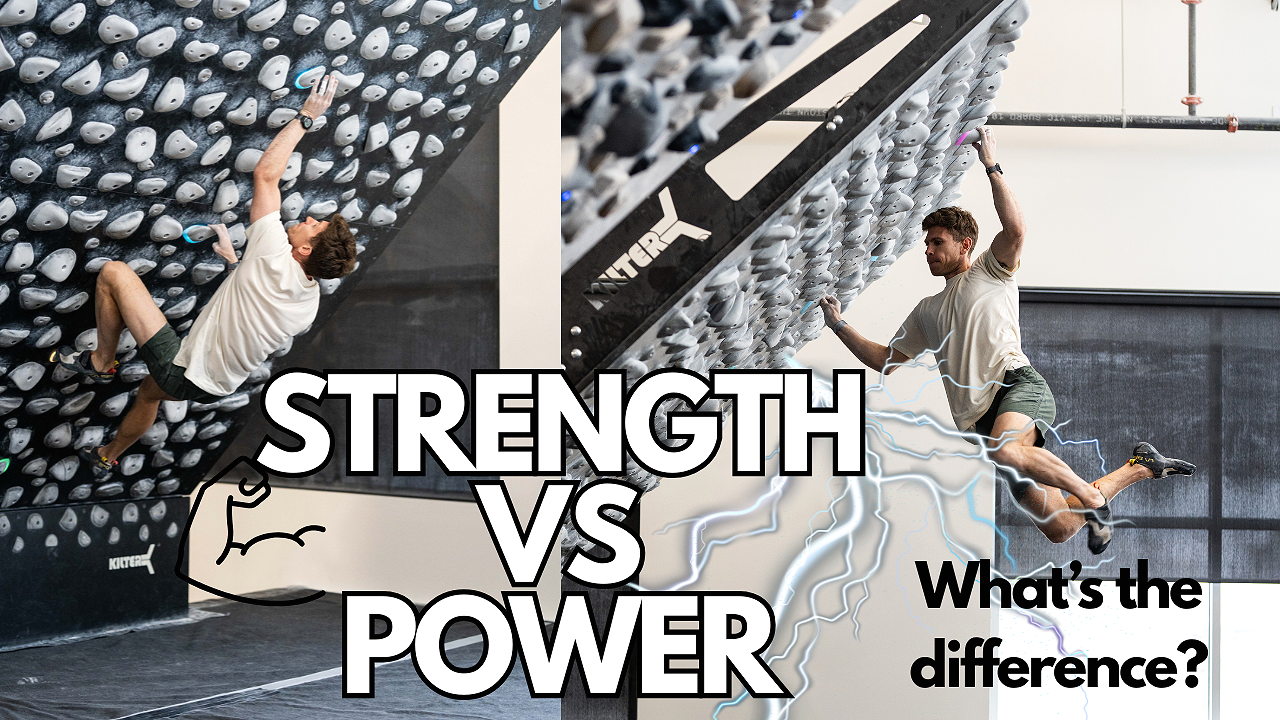
On the wall, strength training should still feel brief and precise. Limit bouldering, long lock-offs, or pause climbing through very hard positions are all effective, provided attempts are limited and rests are generous. This is also why training boards like Moon, Kilter, and Tension boards work so well: they reduce variability, force high tension, and make strength demands obvious. You don’t have to wonder whether the session was hard enough — the board makes that clear.
Where climbers tend to go wrong is by letting strength sessions drift. Efforts get longer, rests get shorter, volume creeps up, and sessions get stacked too closely together. Once fatigue starts changing movement quality, you’re no longer training strength — you’re training your ability to tolerate fatigue.
The simplest way to think about strength is this: it’s your ability to produce maximal force, not your ability to hold on while tired. If an effort fails immediately, without pump, you’re probably in the right zone. If fatigue starts to dominate, you’ve moved on to something else.
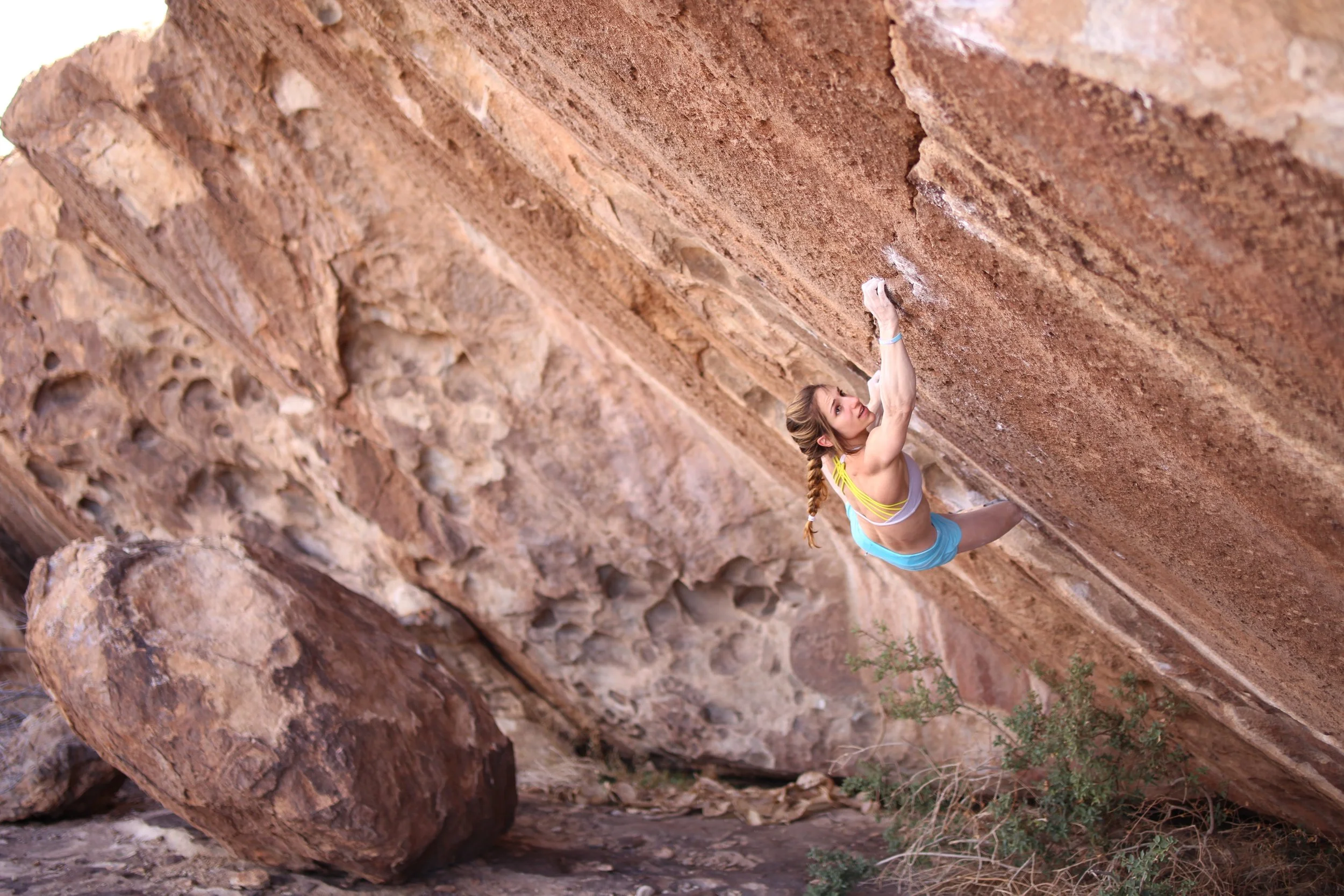
Alex Puccio climbing the strength test piece SlashFace V13 in Hueco Tanks. Watch Now
Weight training can support climbing strength when it’s used with restraint and intent. Its role isn’t to replace climbing or hangboarding, but to reinforce the ability to generate high levels of force through simple, stable patterns. For most climbers, this means keeping repetitions low and effort high. Sets should feel heavy and deliberate, not grindy or metabolically demanding.
Simple exercises tend to work best. Movements like weighted pull-ups, rows, presses for shoulder balance, and controlled core work allow high force output without excessive technical noise. Placement matters too: weight training is usually best done after climbing, so it doesn’t steal quality from on-the-wall work, or on separate days when recovery allows. As with everything else, strength improves when total training load is sustainable, not when everything is pushed at once.
Strength, ultimately, is about force — not fatigue. If an effort fails immediately, without pump, you’re probably in the right zone. If fatigue starts to dominate, you’ve moved on to something else.
Key Points:
What it is: maximal force generation
How it feels: little to no pump, immediate failure
Effort: 8.5–10 /10 RPE
Duration: 3–10 seconds per effort (ideal: 5–7s)
Rest: 2–5+ minutes (near full recovery)
Hangboarding: 1–2 grip types, high intensity, low volume
On the wall: limit bouldering, long lock-offs, pause climbing
Weight training:
3–5 reps per set
0–2 reps in reserve (RiR)
2–4+ minutes rest
Stop sets when speed or form drops
Golden rule: if fatigue changes movement quality, it’s no longer strength
Next week: Power and how it differs from strength, why it’s often confused with fatigue, and how to train it without losing force.
Robin & Alex
ROAP Coaching